

Published 13:02 19 Aug 2025 GMT+1
Scientists discover more details about ‘potentially hostile alien threat’ hurtling through solar system
It’s only the third visitor from outside our solar system
As the third interstellar object to be observed passing through our solar system gets closer, some scientists are flagging that certain details of this thing have them wondering.
The object hurtling through space is known as 3I/ATLAS, and it has travelled a very long way to get here, with most researchers reckoning that it’s some sort of comet that first started heading our way a long time ago.
However, others have suggested it might be something else, as Professor Avi Loeb of Harvard University said his observations suggested it was ‘a reflecting surface that is about 20 kilometres in diameter’.
He also has some other things to say about 3I/ATLAS, as Professor Loeb has raised the possibility that the interstellar object is not a chunk of rock that has been hurtling through space for billions of years, but an alien vessel containing extraterrestrials.
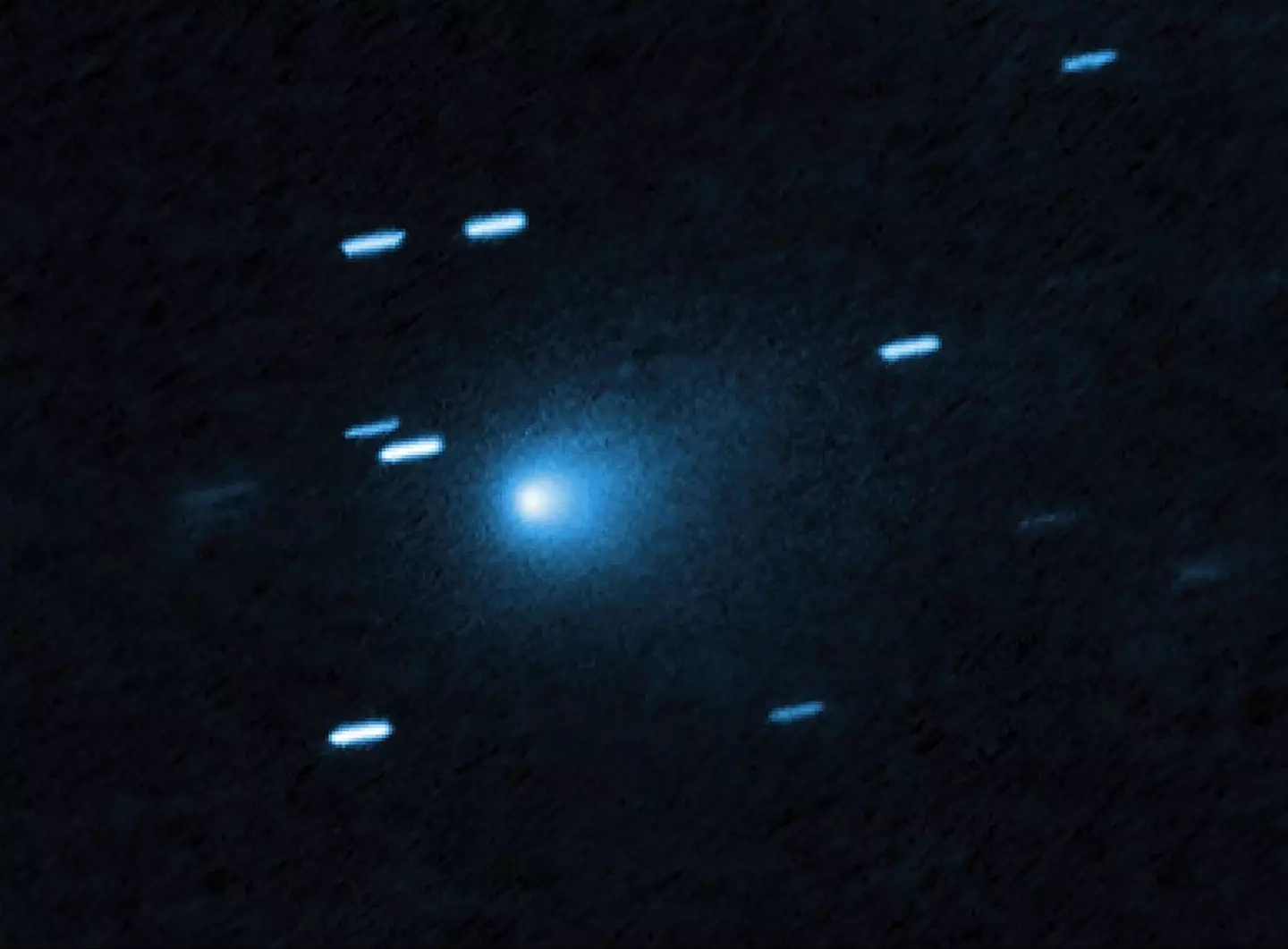
This is 3I/ATLAS, so why does it glow so brightly? (NASA, ESA, David Jewitt)
Studying a recent image taken of the interstellar object by the Hubble Space Telescope last month, he is trying to figure out why it looks like it’s glowing.
He suggested that if the interstellar object generates its own light, then it could be smaller than his previous estimate, with NASA’s own observations suggesting it is smaller than first thought, and argues that ‘illumination by sunlight cannot explain’ the scattered light.
As for what it could be, Professor Loeb suggested 3I/ATLAS could contain a ‘natural nuclear source’, but said this was quite unlikely. The scientist also suggested it might be a spacecraft with nuclear energy powering it, which would mean it was an alien vessel travelling through our solar system.
While the path it takes will carry it beyond Earth, it is not on course to hit us, though Loeb suggested this ‘could be intentional to avoid detailed observations from Earth-based telescopes’.
He said that if it is alien, then it’s ‘potentially hostile’, though his best estimation is that it’s ‘a completely natural interstellar object’, so it’s probably not aliens.
But it could be…
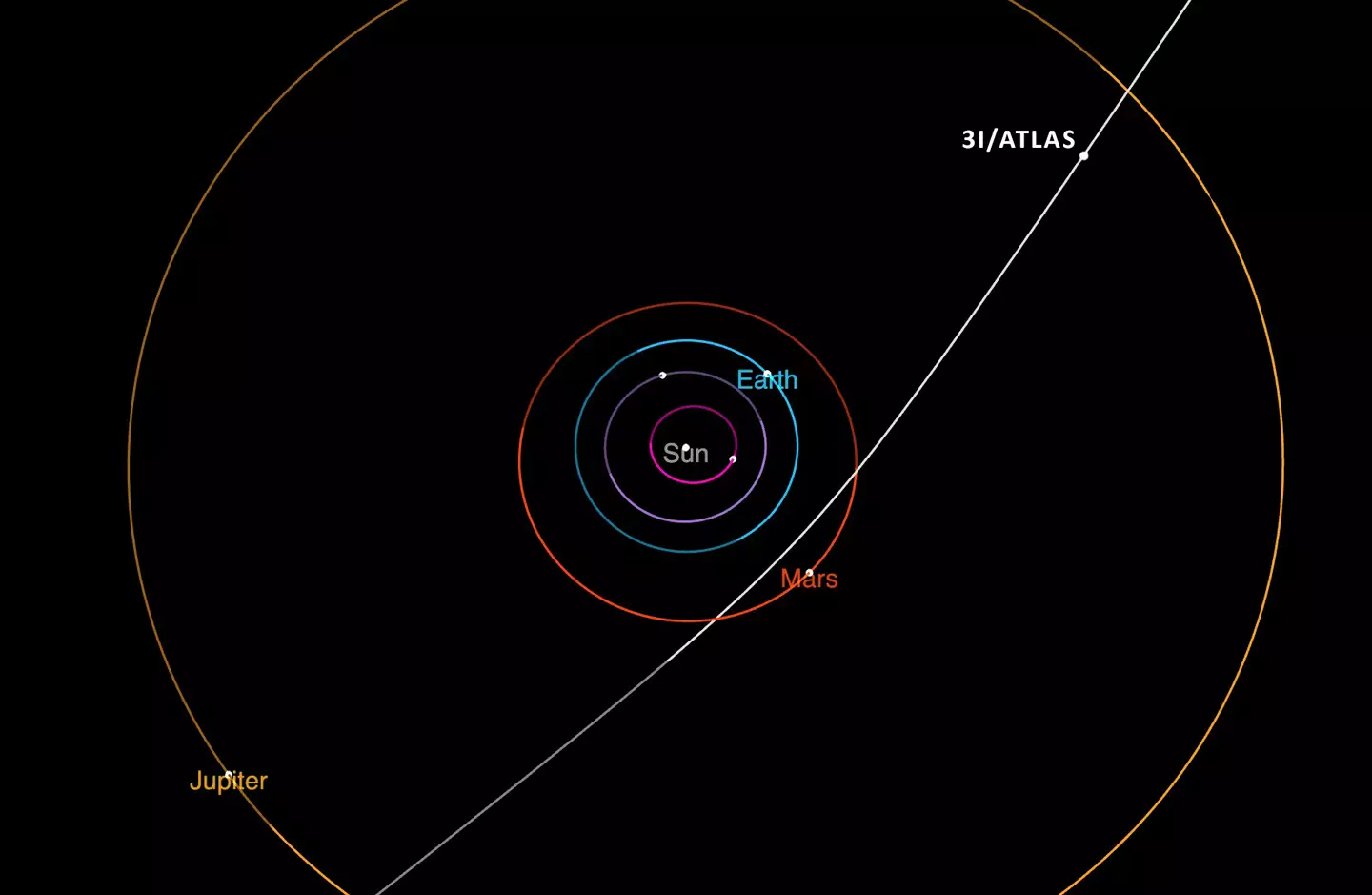
Most experts reckon it’s a comet, but one scientist keeps suggesting it might be aliens (NASA/JPL-Caltech)
NASA experts believe 3I/ATLAS is a comet and have predicted that it will pass through our solar system in the coming months.
However, they’re pretty sure it’s not going to come close to Earth, with the closest it’s expected to get being about 170 million miles away from our planet.
Meanwhile, it will get closer to the sun on 30 October this year, coming within around 130 million miles.
If it really is aliens, then they’re either going to have to change direction very quickly, or they’re just going to do a drive-by. At the same time, if it’s a comet, then nobody but the laws of physics is at the wheel, and we should be very glad this fast-moving interstellar object is going to miss us.
The closer 3I/ATLAS gets, the clearer the view we get of it, though eventually it’ll become impossible to see thanks to the sun before becoming visible again in December.
Featured Image Credit: Getty Images/MediaProduction
Topics: Space, Science, NASA, Aliens

Joe Harker
Updated 11:21 27 Aug 2025 GMT+1Published 09:29 27 Aug 2025 GMT+1
New findings on ‘potentially hostile alien threat’ hurtling through solar system leave NASA shocked
The James Webb Space Telescope has uncovered several details about the rogue comet in our solar system
A peculiar object that has defied NASA’s expectations has been identified in space, which has been labelled as an ‘interstellar visitor’.
Once again, the James Webb Space Telescope (JWST) has done its job in making more groundbreaking space-related discoveries.
From laying its lens on its first ever exoplanet, to theories about humans living on our blue planet inside a black hole, the Hubble Telescope’s successor is doing its job in finding out more about our universe.
Now, it has used its Infrared vision and its Near-Infrared Spectrograph instrument (NIRspec) to observe a comet named 3I/ATLAS.
It was discovered on 1 July by the ATLAS (Asteroid Terrestrial-impact Last Alert System) survey telescope, with experts at first believing it could have been an unidentified alien object.
Professor Avi Loeb of Harvard University even said that if it was alien, it could be ‘potentially hostile’.
JWST has made another massive discovery about our universe (Getty Stock Image)
Well, while it turns out that the comet is very unlikely to be alien, it remains mysterious as NASA continue to study its movements and make discoveries.
It is the third-ever object making its way through our solar system that is said to have come from around another star. The previous two were discovered in 2017 and 2019, being named 1I/’Oumuamua and 2I/Borisov.
In observing the object, details such as its size, physical properties, and chemical makeup will become more clear, as a preprint paper has outlined why studying the comet is so key to understanding our universe.
Astronomers found that the object can be compared to what we know about conditions around the sun 4.6 billion years ago, when planets, asteroids, and comets were forming.
Essentially, when comets approach the sun, they are heated up and frozen materials in them are transformed into gases, resulting in something called ‘outgassing’, which gives them the iconic tail and halo that we associate with comets.
At the moment, 3I/ATLAS is outgassing as it reaches out sun, with the JWST and NIRSpec finding that carbon dioxide, water, water ice, carbon dioxide, and carbonyl sulfide, which is known for its grim smell, were being emitted.
The comet gave off the highest ratio of carbon dioxide to water ever observed too, which could mean that its core is rich in the former.
It would mean that its ices were exposed to higher levels of radiation than objects in our solar system are, with experts suggesting explanations on why the comet may have a high CO2 content.
They say that it could have been formed in a site known as the ‘carbon dioxide ice line’ in the swirling cloud of matter, or a ‘protoplanetary disk’, which made its way around its star.
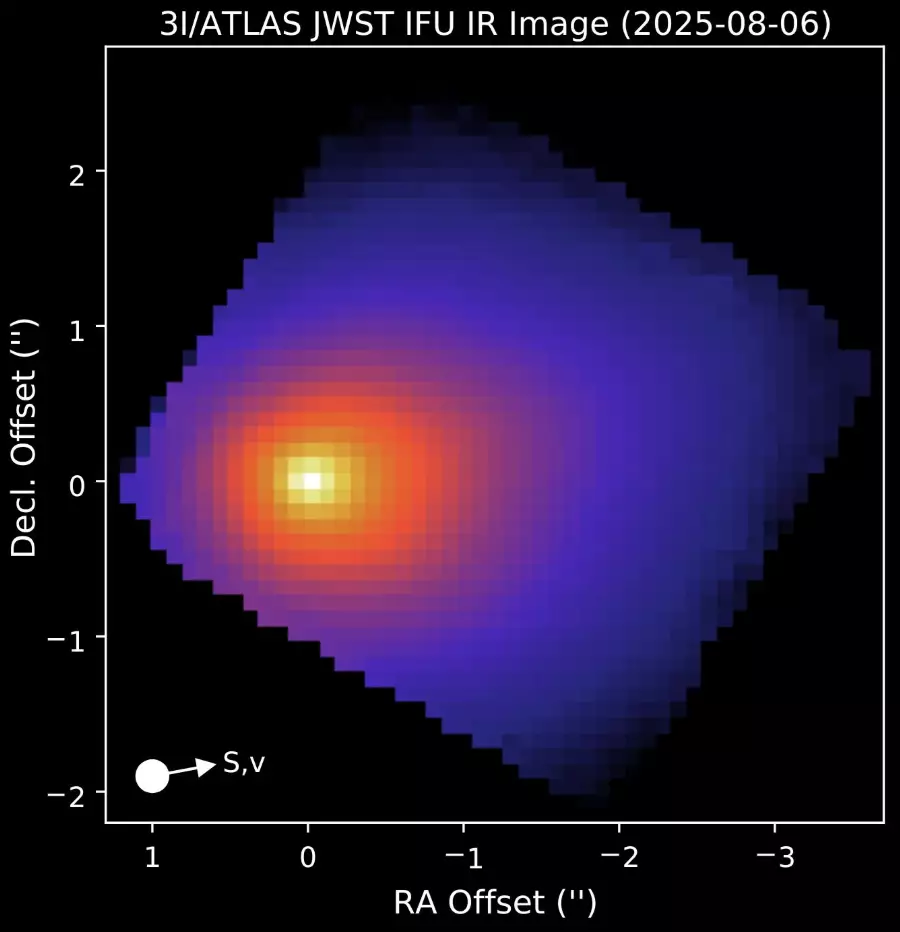
The interstellar object is billions of years older than our solar system (NASA)
The low levels of water in its coma also suggest that 3I/ATLAS may inhibit heat as its icy core is penetrated.
These new findings add to what is already known by scientists, including the previous discovery that the comet may be around three billion years older than our solar system.
Due to the object’s steep trajectory, it was suggested that it comes from the Milky Way’s ‘thick disk’ of stars’, which is an ancient part of our galaxy which has been around far longer than the ‘thin disk’, where the sun was formed.
There’s still more to uncover though – take it away, JWST.
Featured Image Credit: NASA
Topics: James Webb Space Telescope, Space, Science

Joshua Nair
Advert
Advert
Advert
Updated 18:04 30 Jul 2025 GMT+1Published 14:46 29 Jul 2025 GMT+1
What NASA has said about ‘hostile alien threat’ that scientist says could attack Earth in coming months
A scientist reckons this strange new object is an unwelcome visitor
Out there in the depths of space, or at least the depths of our own solar system, is an object hurtling in our general direction at a speed of around 36 miles per second.
This thing is really, really fast and while it’s headed our way current projections say it won’t be anywhere near close enough to strike us.
That’s reassuring, particularly since new observations of this interstellar object suggest it’s around seven miles wide, meaning that this thing would be of comparable size to the asteroid that wiped out the dinosaurs.
All in all, it’s a good thing that this object that’s come into our solar system is on course to miss us by a wide margin, though there are some who’ve suggested all is not as it seems.
Those minded to believe in aliens have suggested that the object known as 3I/ATLAS might be a trick sprung on us by aliens to get close and then attack us when we least suspect it.
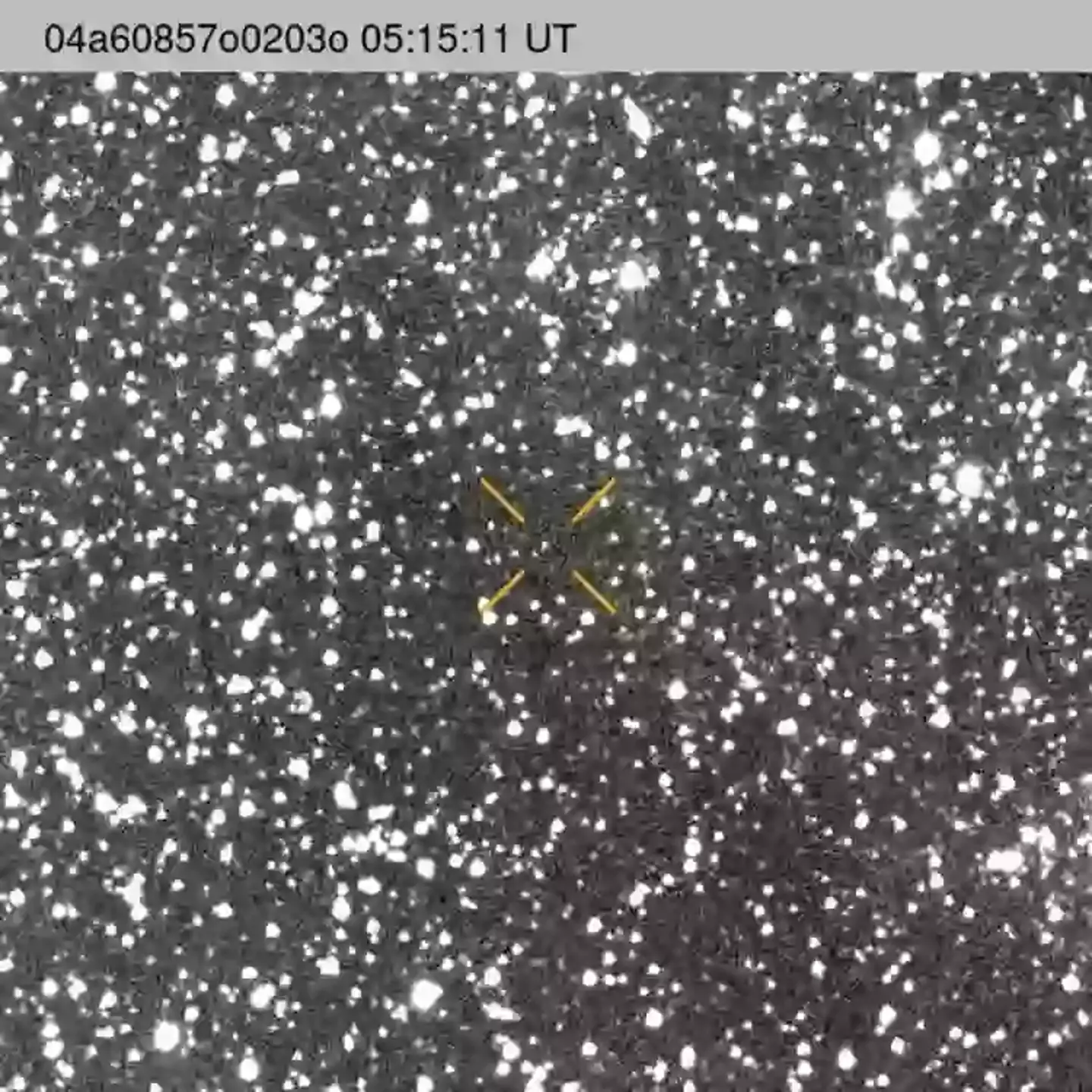
It’s big, it’s fast and it’s coming our way (ATLAS/University of Hawaii/NASA)
Scientists claim ‘potentially hostile’ aliens could attack Earth
A group of scientists have suggested that an object moving through our solar system is ‘potentially hostile’ meaning it could attack us within the next few months.
That’s all we need, an alien invasion bearing down on us while we’re busy trying to sort out the travails of normal life.
Researchers Avi Loeb, Adam Hibberd and Adam Crowl have suggested that the interstellar object 3I/ATLAS has the potential to be carrying extra-terrestrial intelligence.
They suggested that 3I/ATLAS’ path through our solar system could be ‘intentional to avoid detailed observations from Earth-based telescopes’, which would meant that any kind of decision making process on board would know we were living here and had the means to spot them if they weren’t careful.
The researchers said that in the event of an attack it’d ‘require defensive measures to be undertaken’.
It’s the size of 3I/ATLAS which has them thinking it might house alien life, though the scientists did say that the most likely outcome was that it was a comet as it appeared to be.
.jpg)
A team of researchers have suggested the interstellar object may be aliens (Aaron Foster/Getty Images)
When was 3I/ATLAS discovered?
NASA confirmed the existence of this interstellar object, meaning it came from outside our solar system, earlier this month.
It was detected on 1 July when it was about 420 million miles from Earth and projected to come a lot closer, and it was named for the thing that first spotted it.
The name ‘3I’ comes from it being the third interstellar object to be detected in our solar system, while the ‘ATLAS’ part comes from the asteroid impact early warning system that discovered the presumed comet.

NASA has given its verdict (Bjarte Rettedal/Getty Images)
NASA’s verdict on the object
Paul Chodas, NASA’s director of their Center for Near Earth Object Studies, has said it was likely that this thing ‘travelling through space for hundreds of millions of year’.
Speaking to AP, he said we didn’t know which part of our galaxy this object had originated from but that it had been on a particularly lengthy journey to reach our solar system.
However, NASA has been clear to stress that 3I/ATLAS poses no threat to planet Earth as the closest it will come to us is about 170 million miles.
“We’ve been expecting to see interstellar objects for decades, frankly, and finally we’re seeing them,” Chodas said, as the NASA official also stressed that this object was ‘not artificial’ and made it clear this was not an alien spacecraft.
“A visitor from another solar system, even though it’s natural – it’s not artificial, don’t get excited because some people do.”
Featured Image Credit: NASA/JPL-Caltech
Topics: Space, Science, Aliens, NASA
Joe Harker
Advert
Advert
Advert
.jpg)
Published 07:51 31 Jul 2025 GMT+1
Project Blue Beam explained as conspiracy resurfaces in wake of ‘potentially hostile alien threat’
Comet 3I/ATLAS has sparked concerns about a sinister conspiracy theory
The news that a ‘potentially hostile’ alien object could be heading towards Earth has reignited an online conspiracy theory known as ‘Project Blue Beam’ – but what exactly is it?
In case you’ve missed it, a research paper was recently published which suggested that comet 3I/ATLAS could potentially be an intelligence gathering device sent by an advanced alien civilisation to monitor us.
The research – conducted by Avi Loeb, Adam Hibberd and Adam Crowl – argued that the comet’s trajectory has a ‘0.2 percent’ of being naturally occurring.
Which is certainly something to give pause.
Although Loeb ultimately concluded that 3I/ATLAS is most likely a ‘completely natural interstellar object’ the report has caused numerous conspiracy theories to resurface – and not all of them actually involve little green men invading from the cosmos.
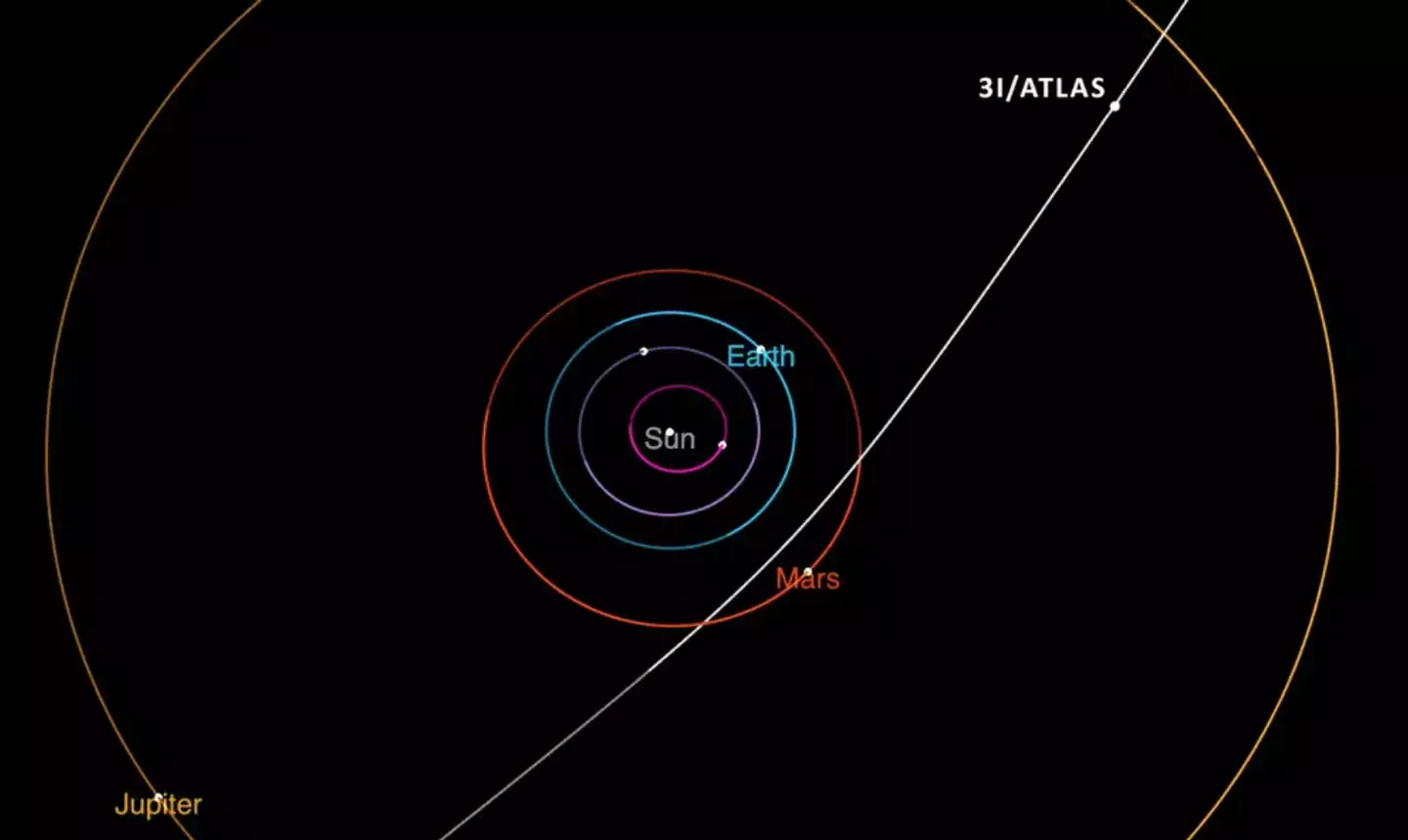
The predicted trajectory of the comet, which piqued researchers’ interest (NASA/JPL-Caltech)
According to some members of the tin foil hat brigade, the entire story about ‘potentially hostile’ alien spyware is completely fabricated and designed to cause panic.
But why, you ask? Well, that’s where Project Blue Beam comes into play.
What is Project Blue Beam?
Project Blue Beam is a theory created by the late Canadian journalist Serge Monast in the 1990s.
Monast argued that global leaders would work together to ‘fabricate’ supernatural events in order to create a global totalitarian government. He also believed such events would bring about the collapse of existing world religions.
Despite the idea being three decades old, Monast passed away in 1996, Project Blue Beam floats to the top of internet chatter every now and again, usually in the aftermath of alleged viral supernatural sightings.
According to Newsweek, the topic popped up back in December 2024 after multiple drones were sighted over the state of Pennsylvania, with prominent figures such as Roseanne Barr and Alex Jones posting about the topic.

The paper lead to numerous conspiracy theories, including claims that we were living through the prelude to an alien invasion (Getty Stock Image)
What are people saying about 3I/ATLAS and Project Blue Beam?
Unsurprisingly, the words ‘potentially hostile’ and ‘alien’ worked like tinder on the conspiracy theory bonfire, with believers in Monast’s theory claiming this was the exact sign they’d been warning about for years.
In one post created by the TikTok user @Interstellardiscussion, he urged his followers to ignore any advice given by governments in emergency situations, saying: “This is the beginning and I urge you, look up Blue Beam.”
Meanwhile, one person on X even claimed the story was being used as a ‘distraction tactic’ by President Donald Trump.
“Donald Trump would rather push Project Blue Beam than have the Epstein Files released. ‘Aliens in November’ my a**,” they alleged.

Others claim it’s fear-mongering created by world leaders (Getty Stock Image)
However, not everyone is convinced by the argument, with many Redditors dismissing the topic when it was recently brought up on a paranormal subreddit.
It’s also worth noting that NASA – who are supposed to be involved in the alleged Project Blue Beam fear-mongering – has been quick to quash any suggestion that an alien invasion is imminent, saying the comet is ‘natural’ and poses ‘no threat to planet Earth’.
Featured Image Credit: Getty Stock Photo
Topics: Viral, Space, NASA, Weird, Science

Brenna Cooper
Advert
Advert
Advert
Updated 17:08 13 Jul 2025 GMT+1Published 15:59 13 Jul 2025 GMT+1
Expert reveals key piece of evidence that interstellar object zooming through our solar system ‘is alien spacecraft’
Comet 3I/ATLAS is the third confirmed interstellar object to enter our solar system
An expert has explained why he thinks that an interstellar object travelling through space could be an ‘alien aircraft’.
3I/ATLAS is the third interstellar object, that we know of, to enter our solar system following ‘Oumuamua in 2017 and comet Borisov in 2019.
It was only discovered last month (1 July) by the ATLAS survey telescope in Chile and NASA was quick to confirm that the comet wasn’t from our solar system.
Observations showed that it wasn’t an asteroid and instead revealed a coma (a cloud of gas and dust), possibly between 20km and 24km across.
And given that it’s travelling at 60 km/s, it’s moving too fast to be gravitationally bound by the Sun, confirming it to be interstellar.
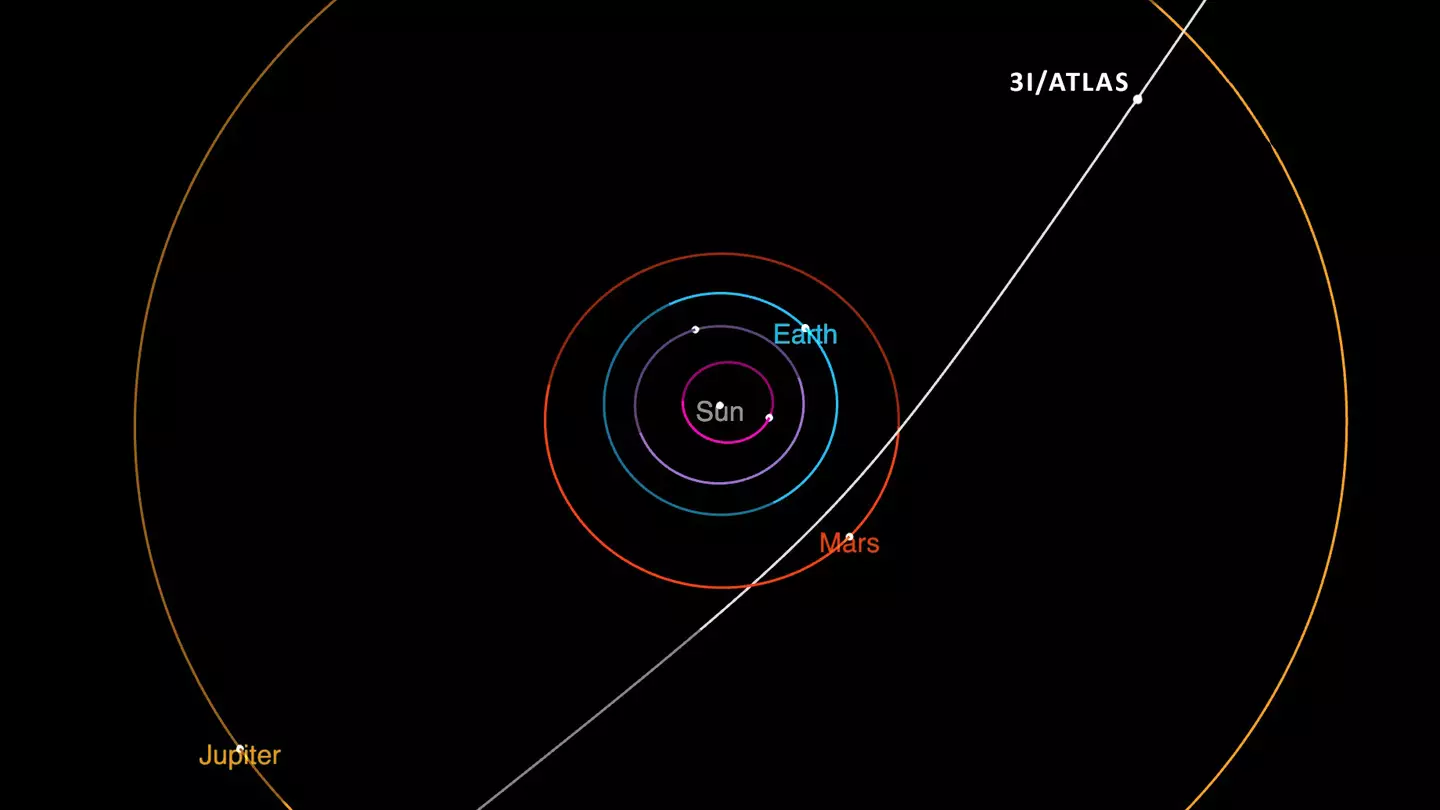
Thankfully, ATLAS poses no threat to us as it’s expected to pass between the orbits of Earth and Mars without striking anything.
Its closest point to the Sun will be on 30 October, 130 million miles away.
‘Evidence’ suggesting that 3I/ATLAS could be an ‘alien spacecraft’
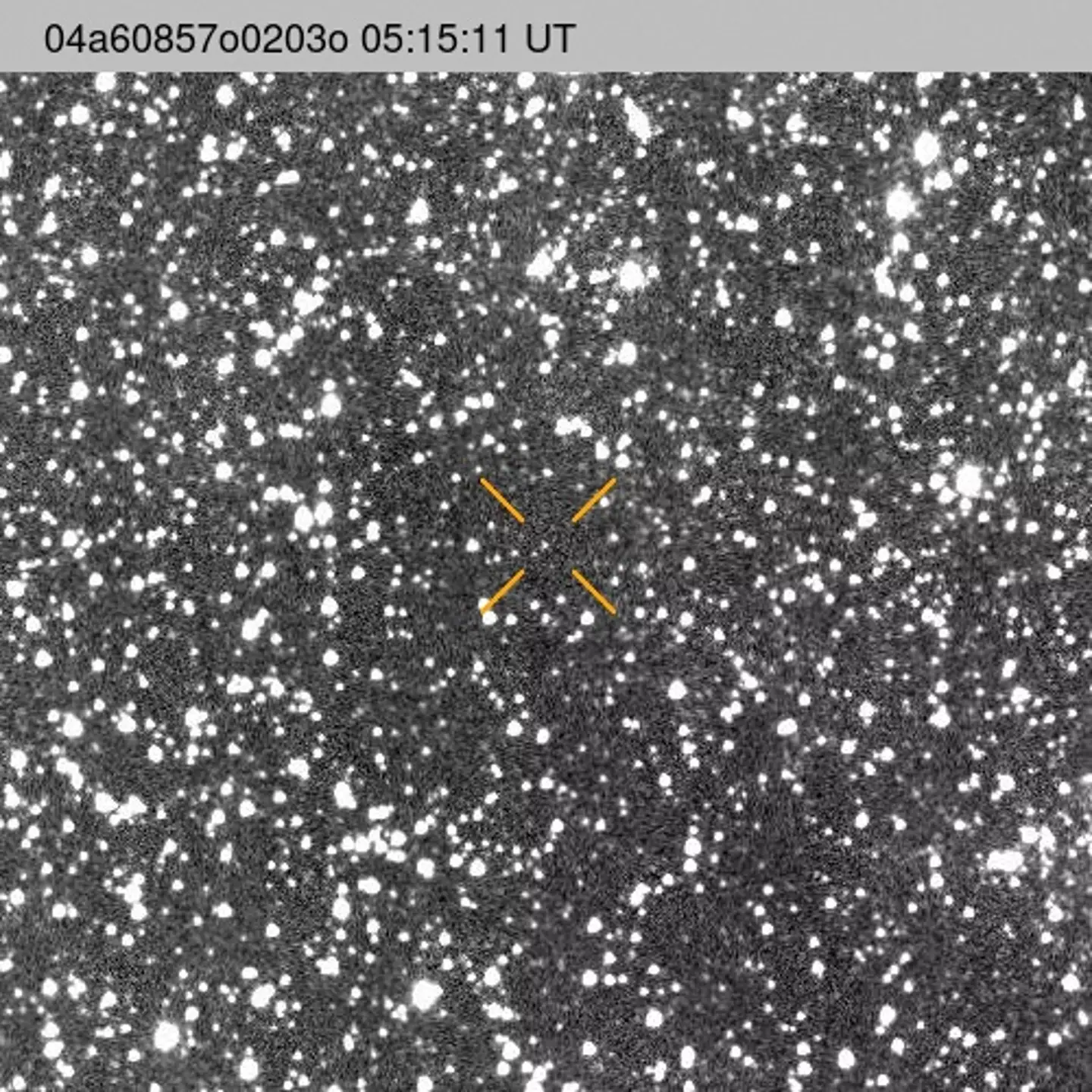
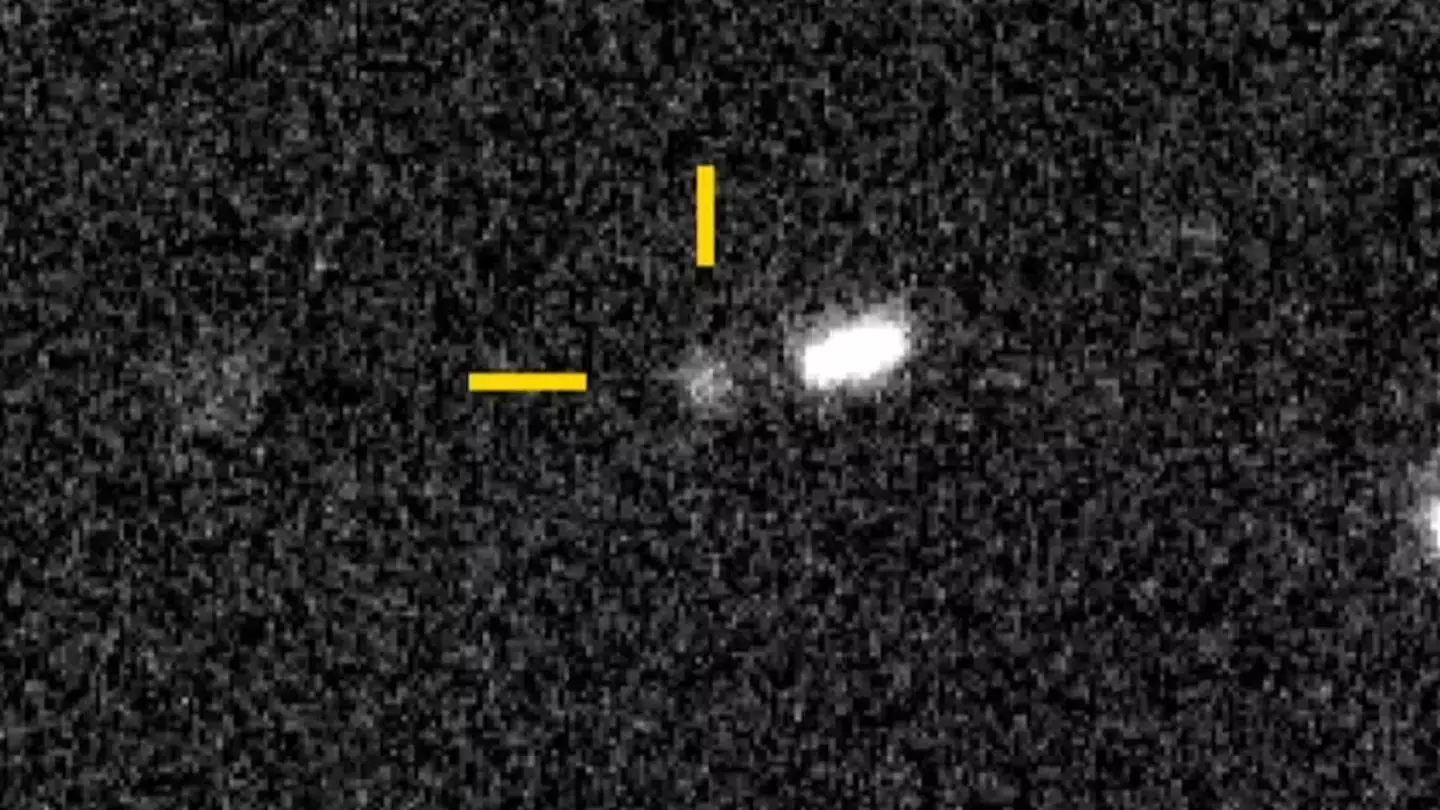
3I/ATLAS was discovered on 1 July 2025 (ATLAS/University of Hawaii/NASA)
Professor Avi Loeb, of Harvard University, told MailOnline that if ATLAS turns out not to be a comet, it could suggest something out of the novel Rendezvous with Rama by Arthur C. Clarke.
It’s the story of an object from beyond our solar system which turns out to be a spacecraft from an alien civilisation.
The theoretical physicist says the latest calculations show 3I/ATLAS to be up to 200 times larger than the 100-metre-long ‘Oumuamua.
Professor Loeb said: “Now you ask, ‘how many objects on the scale of ‘Oumuamua are there for each object that is 24 kilometres in size?’
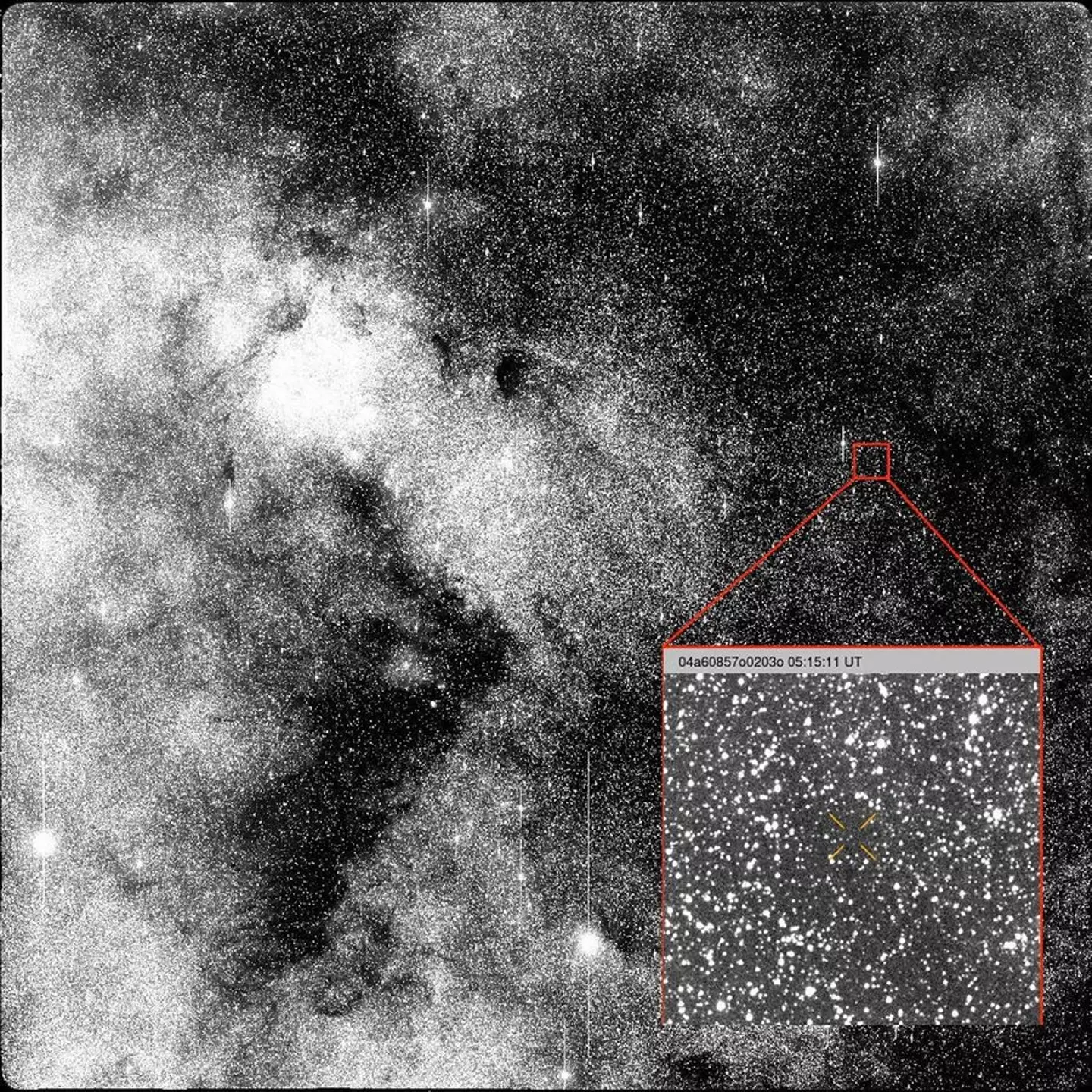
Comet 3I/ATLAS is the third confirmed interstellar object to enter our solar system (ATLAS/University of Hawaii/NASA)
“The answer is about a million. But we haven’t seen a million ‘Oumuamua-sized interstellar objects before seeing this one, it’s very strange.”
Expressing how weird it is for something so large to be flying around, he added: “It’s not like these objects are floating around in all directions, this object was aiming to get to the inner solar system.
“The question is: ‘Why was it sent in the direction of the inner solar system?'”
Professor Loeb said its size ‘makes zero sense’ and ‘ends up being a quarter of the mass of the stars in the Milky Way’.
“But because only two percent of the mass in stars is in heavy elements that make rocks, you don’t have the mass to make enough rocks of this size,” the expert added.
NASA categorises 3I/ATLAS as a comet
NASA said astronomers don’t know exactly how big 3I/ATLAS is, but from their observations, they can see that it’s active.
Its ‘icy nucleus and coma (a bright cloud of gas and dust as it approaches the Sun)’ is why 3I/ATLAS is categorised as a comet and not an asteroid.
Featured Image Credit: Fillip Romanov
Topics: NASA, Space, Aliens, UFO

Anish Vij
Advert
Advert
Advert
https://www.ladbible.com/news/science/hostile-alien-threat-3i-atlas-earth-635281-20250819
Post by email
wuge766rume
